Unfold.Video Review
Seeing THE Reality of The AI “Pre-Sell MACHINE” BEFORE YOU BUY
The problem most people who sell online have isn’t the one they think they have. They think their sales page is broken. Usually the sales page is okay. The broken thing is a cold visitor landing on an offer before they have any reason to care about it, seeing a price and leaving.
Kuick LLC has released a new tool called Unfold.video that aims to fill exactly that gap. It launches September 5th, 2026 at 11:00 EDT Front-end price: $27. You don't send traffic to a pitch, you send it to a staged sequence of videos that unlock over a few days so that when the offer pops up the viewer has been warmed up already.
In this review I’ll cover what the product is, how much it costs, how the upsell funnel is structured, who’s behind it, and where the marketing goes beyond the evidence. It is written for the person who is deciding whether or not to spend their money, not the person who has already decided to buy.
WHAT UNFOLD.VIDEO TRULY IS
Ignore the marketing blurb and Unfold.video is a staging video release builder.
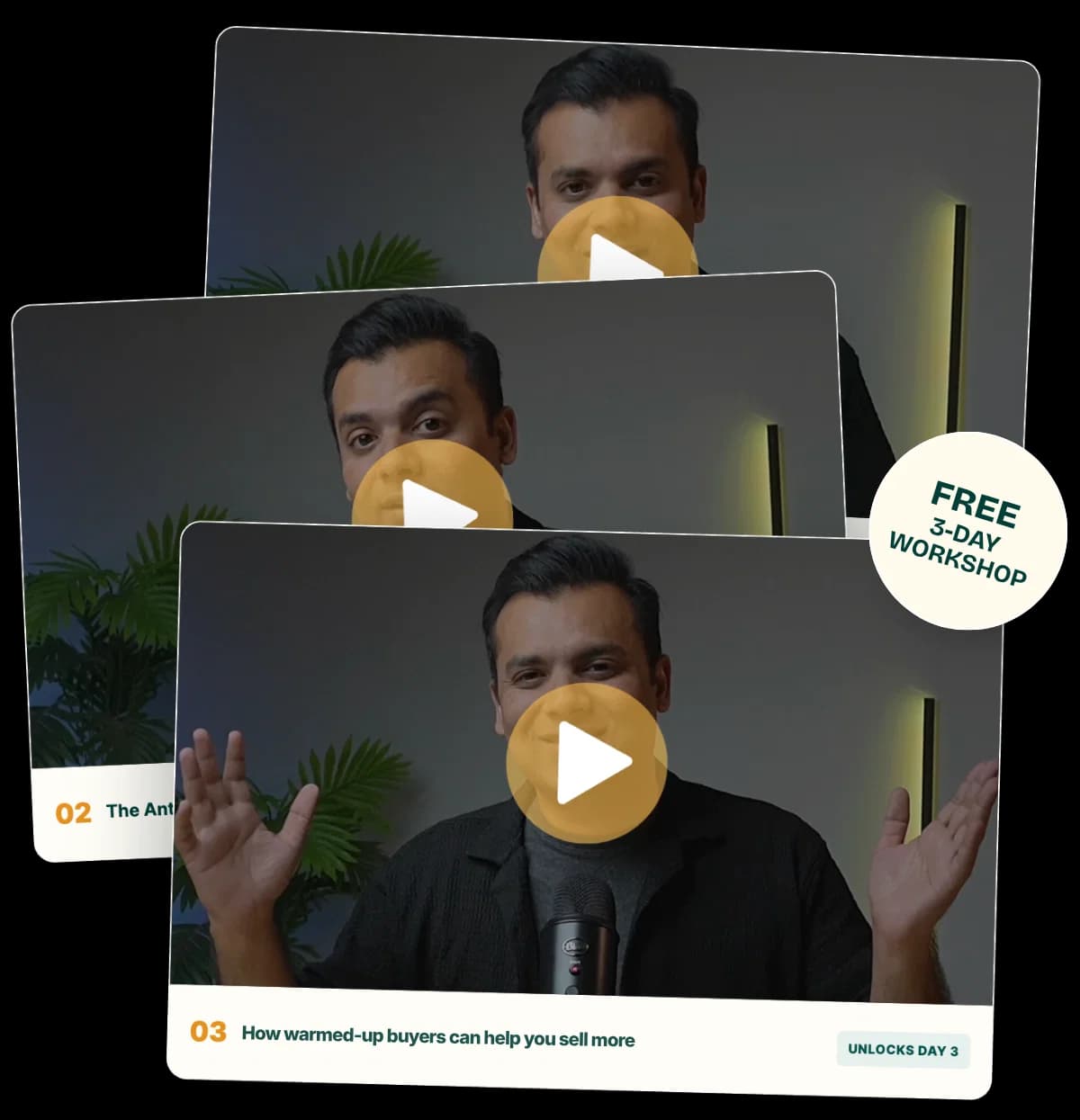
You make an offer to it. It creates a page or short funnel where your audience sees a series of video “episodes” Some are unlocked and watchable now. The others are all clearly locked, and each has a release date. You can also see that video two will be out tomorrow and video three the day after. The whole mechanic is that visible lock . It makes an open loop in the viewers mind that can only be closed by coming back .
By the time the last video comes up with your offer attached, the viewer has spent several days of attention. They are no longer a cold prospect reading a pitch. They are someone who has been following.
On top of that there is an AI layer. The vendor says you give your offer details to the Unfold.video AI Skill, which finds the best hooks in your offer, creates a multi-video launch sequence, and writes the scripts for each episode.
Also, there is an evergreen mode. Instead of one live launch on set calendar dates for all, the sequence can run on each subscriber’s own clock, so if someone joins on Tuesday, their personal day one is Tuesday.
THE CORE VALUE AND WHY THE MECHANIC WORKS
There is one thing that the sales page doesn’t mention, but it is important to be clear about. This method is not new and Unfold.video didn’t invent it.
For about twenty years now the “sideways sales letter” (as launch marketers have called it) has been the backbone of staged pre-selling in a series of released videos, The psychology is established. Unopened curiosity is uncomfortable, so people go back to close it. Repetition breeds familiarity, and familiarity breeds compliance. If someone has watched you for four days, they trust you more than someone who has watched you for four seconds.
So the method is reasonable. What Unfold.video sells is not access to a secret. It sells the elimination of assembly work.
That distinction honestly tells you what you are buying. You could do the same sequence today with unlisted videos on a free host, a scheduled email sequence and a basic page. Would have worked. You would also have to do it for a lot longer, rebuild it for every offer, and it is really fiddly to make it evergreen by hand. This is a purchase of convenience and speed, not ability. On that basis it can be worth the money. It will fail as a secret weapon.
APPLICATIONS IN PRACTICE
This is more or less the vendor workflow.
• First you tell the AI builder what your offer is. This could be your own product, course, coaching program or affiliate offer. The vendor’s rule of thumb is simple: if it’s got a link, it can have a launch.
• Secondly, the AI recommends the structure, points out the angles that are worth leading with and writes the script for each episode, so you are not looking at a blank page.
• Third, you make the videos and upload it in. This step is still up to you.
• Fourth, you decide the drop schedule: how many episodes, how spread out, and whether it’s a fixed live launch or an evergreen sequence tied to each viewer’s own start date.
• Fifth, you connect your list to your tracking. The platform offers lead capture and integrates with Grawt, Kit, Zapier and other tools, with webhooks for the rest.
Then you start to send traffic and the sequence runs itself.
KEY POINTS
• The AI reveal machine. The script, structure layer. Make the offer, then get a sequence outline with drafts of episode scripts and suggested hooks.
• Episodes locked with release dates shown. The heart of the conversion mechanic and what drives the return visit.
• Evergreen sequences . Each subscriber has their own launch timeline, so one build continues to be functional after launch week is over.
• Multiple simultaneous funnels. “We can do 10 launches at once, one for each offer, niche or client,” says the vendor. It is not stated in the material for which price tier this limit applies.
• Built-in lead capture. Integrations with Grawt, Kit and Zapier and webhooks for the rest.
• Top-level reseller rights: an option to be able to sell the software yourself rather than a feature you use.
WHAT YOU CAN PRACTICALLY EXPECT TO GET OUT OF IT
Instead of how the sales page describes it, the realistic benefits are these, to put it mildly.
• You don’t send cold traffic to a pitch. This alone is the biggest structural improvement most small sellers can make.
• You can cut the build time for a launch sequence from days to something like an afternoon. You can rebuild the structure for a new offer without starting from scratch.
• You get a first draft of your scripts, rather than a blank page which is the real blocker for many people.
• You give them a reason to come back. Repeat contact is what makes a list an audience.
• You get a re-usable asset. Once an evergreen sequence is built, it keeps running without any more work.
What you should not expect is demand where there is none. This tool makes an offer more attractive. And it doesn’t create it and it doesn’t bring you traffic.
PRICING AND THE ENTIRE UPSELL FUNNEL
The structure available at launch is published as follows.
Frontend, Unfold.video Core: | $27 |
Upsell 1: Unfold.video Pro, | $47. |
Upsell 2, Unfold.video Unlimited: | $97. |
Upsell 3, Reseller Pass on Unfold.video, | $197. |
Bundle Deal All funnels in one purchase. | $247. |
Adding the four tiers individually gives $368, which is the price the vendor uses as the bundle’s comparison price. Everything is sold as a one time payment not a subscription, with a 14 day money back guaranty described as a full refund on a single email, no forms and no exit interview.
One thing buyers should know before launch day: as of this writing, the vendor's published material uses the same single line of placeholder text for all four tiers. So there is no public information on what Pro, Unlimited or the Reseller Pass actually add at this moment. A $197 reseller licence is described in the same words as the $27 front end, which is clearly an unfinished page. If you're buying, read the actual upsell pages carefully on the day, don't assume.
TWO WAYS TO PURCHASE, AND THEY FUNCTION IN DIFFERENT WAYS
There are two different ways to own this product. They are not the same transaction. Know the difference before you click on anything and save yourself some money.
OPTION 1: BUY THE FRONT END. THEN DECIDE ON EACH UPSELL SEPARATELY.
This is the regular way. You purchase Unfold.video Core for $27. After you pay you go thru the upsell sequence which is one offer after another. First is Pro for $47, then Unlimited for $97, and finally the Reseller Pass for $197.
Each one is a genuine independent choice. You can accept all of them, accept some and decline others, or decline them all and keep only the $27 front end. If you decline an upsell you are not canceling your purchase and nothing you have paid for is taken away. The front end runs by itself.
The advantage of this path is control and low barrier to entry. You spend $27 and you only spend more if a specific upsell solves a problem you actually have. If you only mean to run one or two funnels for your own offers, this route may very well end with you having spent $27 or $74 in total.
The downside is the environment in which the decisions are taken. Upsell pages are normally time limited, you’re calling within seconds of your very first purchase and in this case the published descriptions of the tiers give you very little to go on. That’s a bad place to make a considered decision and it’s designed that way for a reason. If you are going to do that, know in advance what your limit is.
OPTION 2: BUY THE BUNDLE DEAL AND AVOID THE FUNNEL
The other way is the Bundle Deal for $247. This is a one time purchase with the front end and the upsells combined. Buying it means you don’t get the main offer and the upsell sequence at all.” There are no one-time offers to accept or reject, because you already own the content.
What you get includes the full platform, AI agent skill, AI builder, evergreen funnel ability and the lead capture/webhook integrations.
The benefit is it’s simpler and cheaper overall if you really want it all. The bundle saves you $121 and removes the pressure of the funnel altogether on the stacked total of $368.
The downside is that the saving is only real if you would have bought every tier anyway, and most buyers would not. If you are interested in the tool for your own offers, then you do not need a $197 reseller license. Remove that tier and you are left with the other three at $171 which is less than the bundle. So part of the discount is an accounting effect, too, because the $368 anchor is a stack that nobody would realistically choose.
If you want reseller rights, or if you do client work and expect to need the higher capacity tiers, the bundle makes perfect sense. It makes less sense if you are one person testing if staged video release lifts conversion on a single offer. In that case, the logical starting point is $27 for Option 1.
WHAT A ONE-TIME PRICE CAN BUY AND CAN’T
This is the part that most reviews skip and it’s the most important thing to understand before comparing Unfold.video to a monthly service.
Video hosting is one of the few software costs that is recurring, and unavoidable. Storage costs money every month . Encoding costs money . Bandwidth costs money every time someone hits play . That is why Wistia, Vimeo, Kajabi and ClickFunnels are monthly. It’s not greed, it’s arithmetic.” They’re constantly having to shell out money to serve you . So they’re constantly charging the same prices .
A one-time payment of $27 or even $247 cannot cover hosting for an active user forever. Something has got to give at some point. Usage caps are tightening and the 'up to ten launches' restriction is already a feature dressed up as a meter. Or quiet hosting becomes bring-your-own. Or there's a paid tier for the parts that cost actual cash. Or the product is folded into the parent company’s subscription platform.
None of that is not honest. But "no subscription" is doing more heavy lifting in the sales copy than it can support. In this market “lifetime” means the lifetime of the product, not yours.
The comparison really isn’t like for like when compared to the bigger monthly providers. A monthly enterprise subscription includes a service level agreement, permanent funded support, a funded development roadmap, data export guaranties, redundancy and scale. You get a feature for one launch product. Support is paid for with launch revenue. If the product sells well, it will be further developed. No guaranty of uptime.
That's no reason to avoid it. It is a reason to purchase it as an experiment, rather than as infrastructure. Store your video masters on your own drive. Maintain your email list with your own provider, not within the tool. Don’t make one funnel inside a \(27 product the single load-bearing asset of your business. If so, spending \)27 to see if a staged reveal boosts conversion on an offer you already sell is a reasonable risk because your downside is capped.
WHO'S BEHIND THAT
That’s what makes Unfold.video different from the disposable part of the market.
The product is published by Kuick LLC, based out of Sheridan, Wyoming. The same company behind Grawt, an established all-in-one marketing platform for websites, landing pages, email marketing, forms, workflows and analytics which has an independent public footprint including third-party review listings and a published roadmap.
The technical side is from Fraz Ahmed, one of the co-founders of ProductDyno in 2016. The platform entered public beta in early 2017 and is used by several thousand educators, authors, publishers, software developers, coaches and membership marketers.
There’s an infrastructure link, too. Grawt is the first integration on the site. Grawt’s content delivery network serves every asset on the Unfold.video site. This feels like a feature on an existing platform, not a standalone that has to build its own stack from week one revenue.
The marketing and launch side comes from Tim Verdouw, a Netherlands-based online marketer with a long track record of software launches and his own review channel.
Practically, that means a company with subscription products already has a better survival profile than a company that gets all its income in launch week. It reduces the risk of platform longevity. It doesn't remove it.
WHERE MARKETING LEADS AND EVIDENCE LAGS BEHIND
Several claims warrant scrutiny.
"Multiplies sales."
There is no multiplier, no baseline, no timeframe, so there's nothing to test. A staged sequence can boost conversions on an offer that already converts. It can’t multiply non-existent sales.
“Turn any offer into a launch event.”
The word that is doing the work here is “any.” The vendor’s own supporting copy quietly describes the ideal input as an affiliate offer that is already converting. The truth of the claim is narrower and more useful: if you have an audience and your offer converts, this might bump up your conversion rate.
The lost pre-requisite.
Nowhere does the material say you need traffic or a list. The whole mechanic depends on people returning to see an episode unlock, which means they had to show up and give you a way to contact them in the first place. Neither does it provide.
The eternal contradiction.
A real launch partly because the deadline is shared and real. An evergreen funnel gives each visitor their own personal countdown, which resets for the next visitor. It still works on a lot of people, but buyers in this market have learned to spot rolling deadlines, and a prospect who reloads in a private window and sees the timer reset costs you more than a sale. The material has pure upside with no trade-off named evergreen.
The warranty period.
The vendor says you can build your videos, run a real launch, then decide and gives 14 days. It's not really possible to script, record, build, drive traffic and wait for a multi-day sequence to finish comfortably in 14 days, especially if you don't have video assets already. It’s also a shorter standard than 30 days on most launches in this space.
Leased authority.
The footer makes it clear that any expert quotes used in the marketing are the published views of those authors, and do not constitute an endorsement of the product. This is a legal disclosure that the reputable names appearing next to the product are not supporting it.
Numbers earnings.
The disclosure says the revenue figures displayed are the vendor's own results with his own offers and are not average and are not a promise or projection. The seller is a professional launch marketer with a large following. His results are not a prediction from you.
WHAT HAS NOT BEEN CONFIRMED
There were two things that could not be verified from the published material, and both matter.
• First of all, it’s unclear whether Unfold.video creates video or just hosts and schedules it. There is a line in the marketing that talks about videos made by your AI agent. Another explicitly instructs you to build your own videos. They are in opposite directions and the answer varies the value of the product a lot.
• Secondly, the contents of Pro, Unlimited and the Reseller Pass are not published in any meaningful detail. Check upsell pages on the day.
FINAL VERDICT
Unfold.video is not a scam and it is not a shell. The mechanic it automates is actually effective and has been for two decades, and the company behind it has a real operating history and existing infrastructure. At $27, it’s a defensible experiment at the front end.
It’s not a machine that multiplies sales for someone that doesn’t have an audience. Marketing makes the inevitable sale. It is a convenience tool that removes assembly work from a method you could do manually for free. The truth is .
If you have a list and an offer that already converts and you’re tired of hand-building launch sequences, buy the front end and see if it lifts your numbers. The $247 Bundle Deal is the cleaner path and spares you the funnel if you want reseller rights or you do client work. If you still don’t have traffic, spend your money on getting traffic first. Anticipation cannot replace an audience that is not there.