
MorphStudio AI Review
Can One Photo Really Become an AI Presenter?
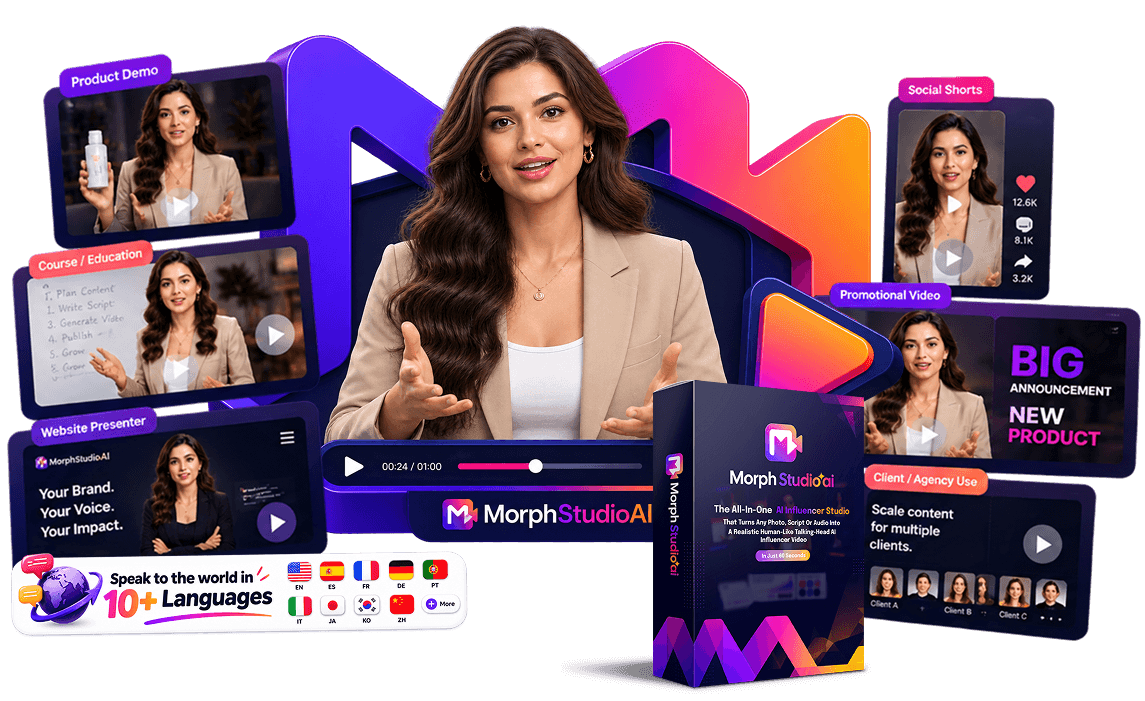
JVZoo and WarriorPlus are full of software launches that promise to replace a camera crew with one photo and most of them overpromise what the software can actually do once you are logged into the dashboard versus reading the sales page. That line now features MorphStudio AI, which promises you upload a photo, add a script or voice recording, and voila, a talking-head video with lip-sync and blinking and hand gestures that is ready to post or hand to a client.
This MorphStudio AI review is based on the sales materials the vendor provided for the September 26, 2026 launch, the product's own website and legal pages, and hands-on time inside the actual dashboard, not just the promises on the sales page.
MorphStudio AI is presented simply under its own brand name, without any named founder or company in the documentation, website or terms of service. Good to know going in: there's no public track record or personal reputation to weigh the marketing claims against, just the product itself.
How to purchase it
There are two completely different ways to start using MorphStudio AI, each giving a noticeably different starting point, so it's worth knowing both before looking at what the software actually does.
The first option is to buy the parts separately. The Front End is the starting point then each upsell is presented individually one after the other and you can choose to accept or decline each one individually without it stopping the next one being presented.
The Front End is called MorphStudio AI Commercial and it's a one-time payment of $37. You'll get 3,000 generation credits, 10 languages, 10 built-in voices, 720p video export, videos limited to 2 minutes each, and a commercial license that allows you to use or sell the output from day one.
The first upsell is MorphStudio AI Pro – $67. It adds support for over 70 languages, 20 more built-in voices for a total of 30, an ElevenLabs voice-import option, increases export quality to full 1080p, adds priority rendering, removes the two-minute video limit, and adds another 6,000 credits to the credit balance.
The second upsell, the Creative Suite, is also $67. This is a bundle of AI writing tools for YouTube, TikTok, Instagram and Facebook scripts, hooks, captions and ad copy, along with a library of over 2,000 done-for-you scripts, hooks and calls to action.
The 3rd upsell is the DFY Avatars Collection and it's $97. It also includes over 300 pre-made avatar characters in 20 categories such as business, medical, legal, real estate and podcast-host styles for those who don't want to use their own face or a client's photo.
The fourth upsell is the Agency Upgrade. The vendor's own documentation is not entirely consistent on its pricing, putting it at 247 dollars in one place and 297 dollars in another, so treat that figure as unconfirmed until it goes live. What it unlocks is clearer. Resale rights to the software, a license for up to 50 client accounts and a set of done-for-you agency sales assets.
The second way bypasses most of that. Instead of purchasing the Front End and then deciding which upsell to buy, one Bundle Deal at 297 bucks wraps several of those pieces into one checkout and skips the base Front End altogether. And then buyers who opt for the Bundle Deal get one more upgrade, which is only available to them, the Mega Bundle, which costs 197 dollars.
Regardless of which option you choose, the guaranty is always the same: a 30 day money back guaranty, processed through a support ticket. That detail is not actually in any of the vendor's own sales documentation, it only appears on the site's own refund policy page, so if you are relying solely on the sales page it is easy to miss. The credit system really limits real usage, so it's worth deliberately using that window rather than just as a formality: create a real, representative batch of videos in the first few days after you buy, track how many credits that actually uses, and figure out if the remaining balance realistically covers what you had planned before the refund window closes.
What MorphStudio AI does is this:
Take away the launch language and the software is centered on four pieces. The Avatar Engine is the casting department: you upload a picture of yourself, a client or choose from the built-in avatar library and the software locks that face as your presenter for lip-sync purposes. The Voice and Script Studio takes care of the presenter's words, either from a typed script or an uploaded audio file, in any of the included voices and languages your tier unlocks. The Performance Director is billed as allowing you to control tone, expression and delivery via simple text prompts, with no animation or prompt-engineering skills needed. The Render and Project Manager is the workspace where you can organize, download and track finished videos, exporting at 720p on the Front End and 1080p on Pro.
There's also the Creative Suite content library, which is essentially 27 short-form AI writing tools: a prompt generator, product descriptions, blog outlines, Instagram captions, TikTok scripts, YouTube titles and descriptions, ad copy for Facebook and Google, and similar tools for ecommerce, blogging, social, and advertising. It's a real standalone feature from the avatar and voice tools and built to give you the content surrounding it and not just the video itself.
The most realistic list of what people will actually use this for looks like product demo videos, short explainer clips, social media presenter content, course intros and client facing sales videos for freelancers and small agencies. That's not to say the two-minute Front End cap isn't a dealbreaker, since most of those formats are short by nature anyway. The cap and credit ceiling come into play where you are creating longer form content, e.g. full webinar replays, multi-lesson course narration, or anything meant to run for several minutes at a time, which pushes a buyer fairly quickly toward the Pro upsell, and even then only adds a limited amount of extra runway rather than removing the limit altogether.
What It's Really Like To Use
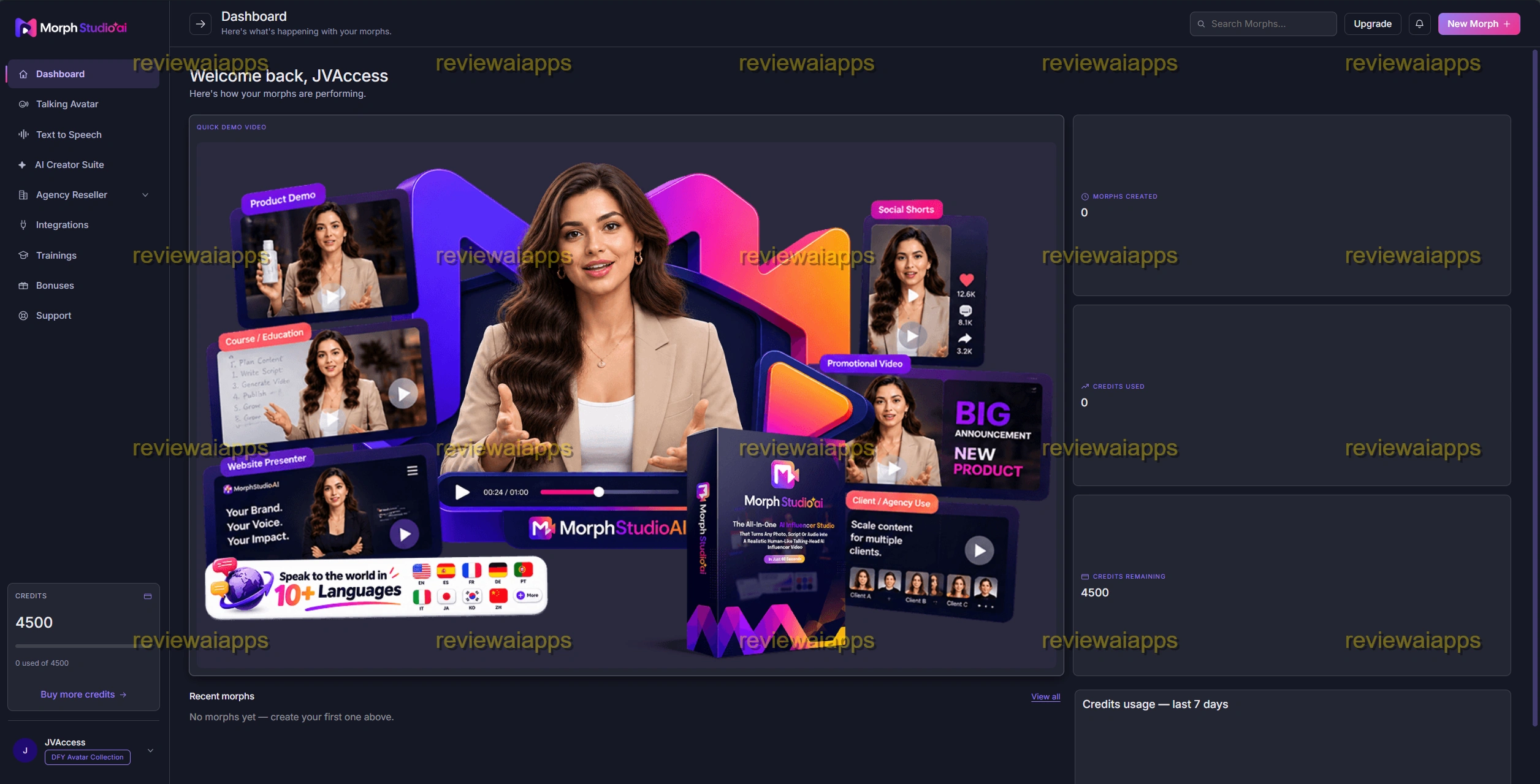
To use the Talking Avatar tool from beginning to end, you just need to login to the dashboard and then type or upload a script, select a voice and a resolution, pick an avatar and generate.
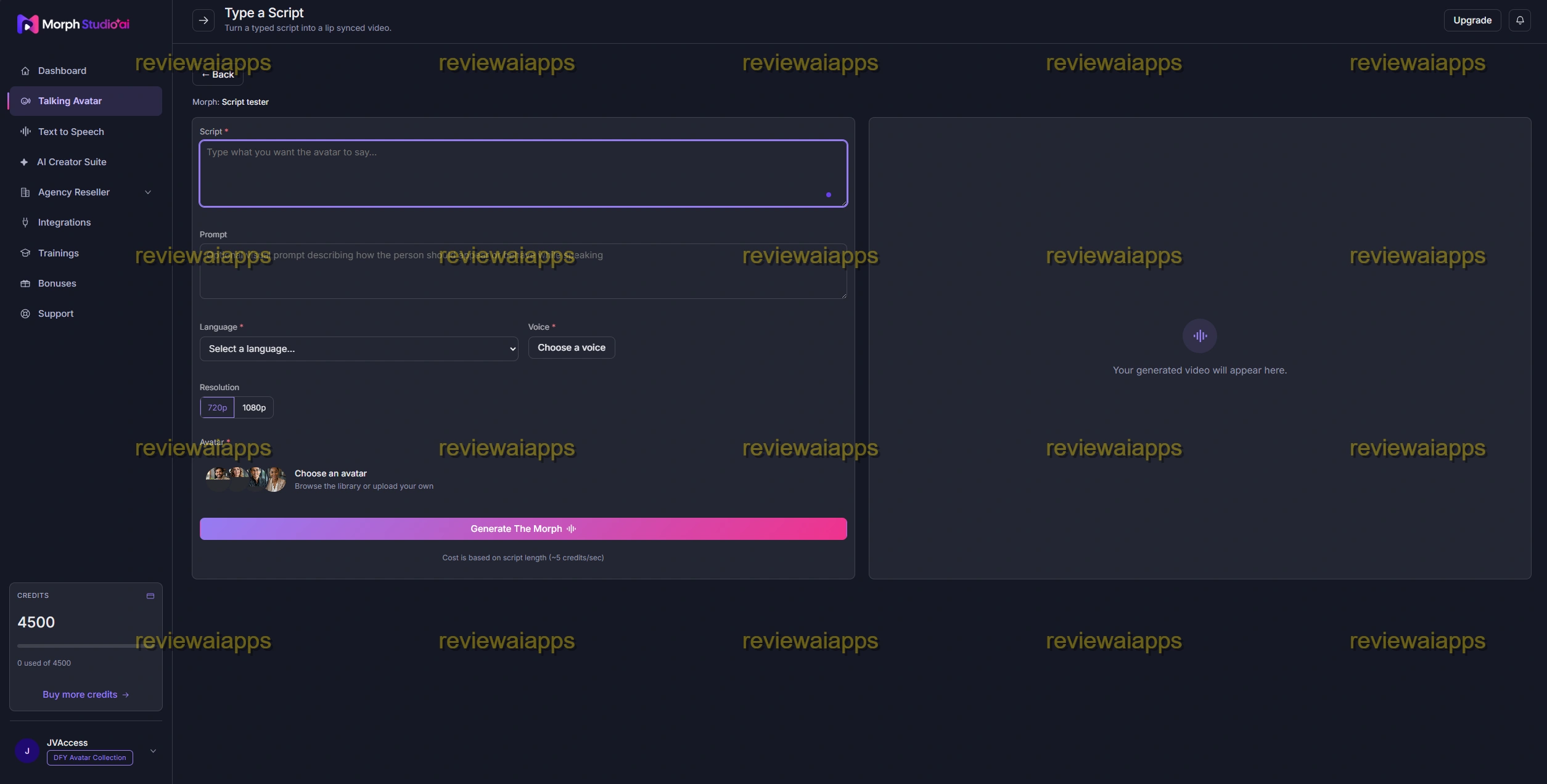
The final video is well lip synced and moves in a reasonably natural way with good hand gestures and expression.
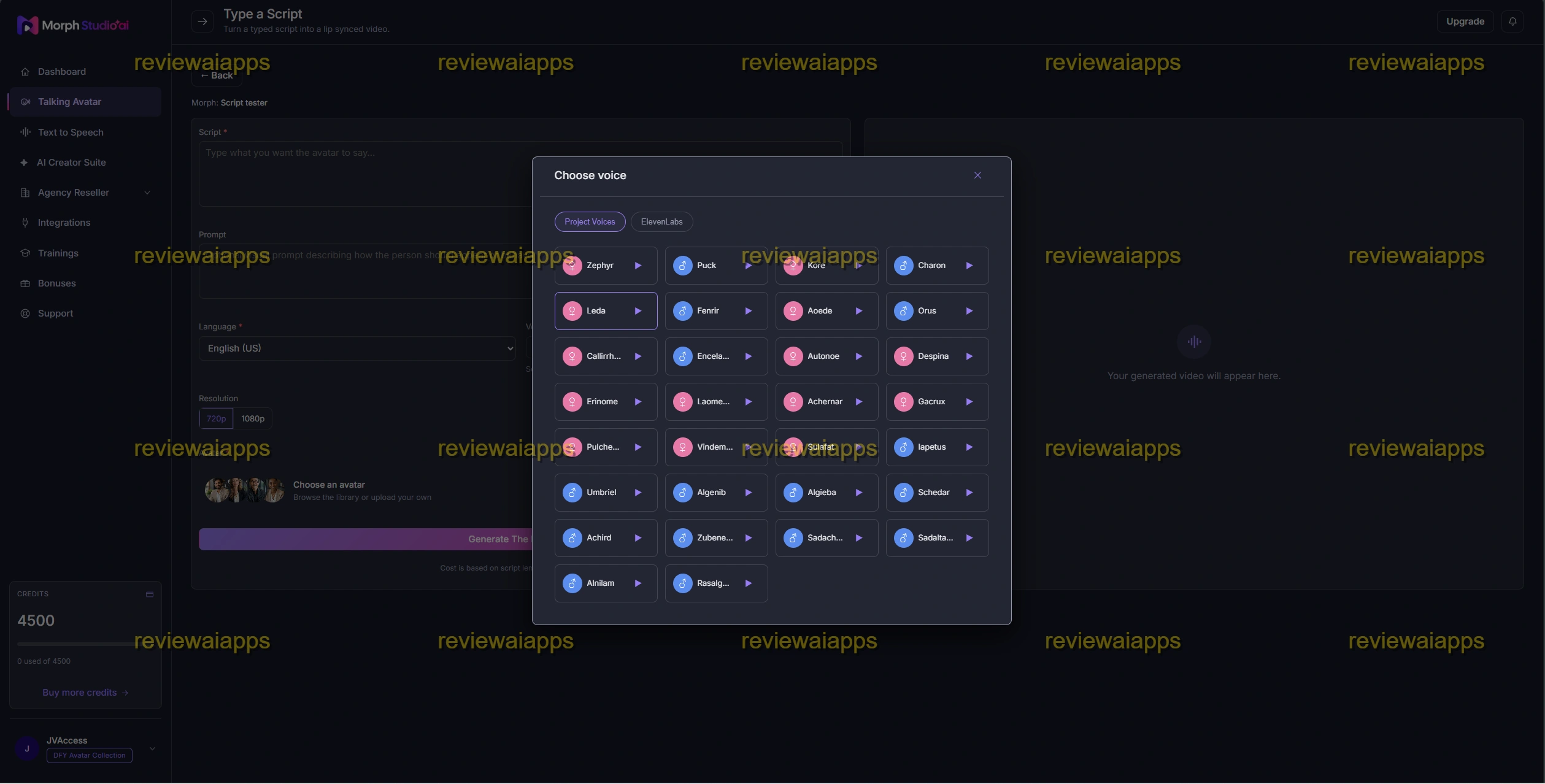
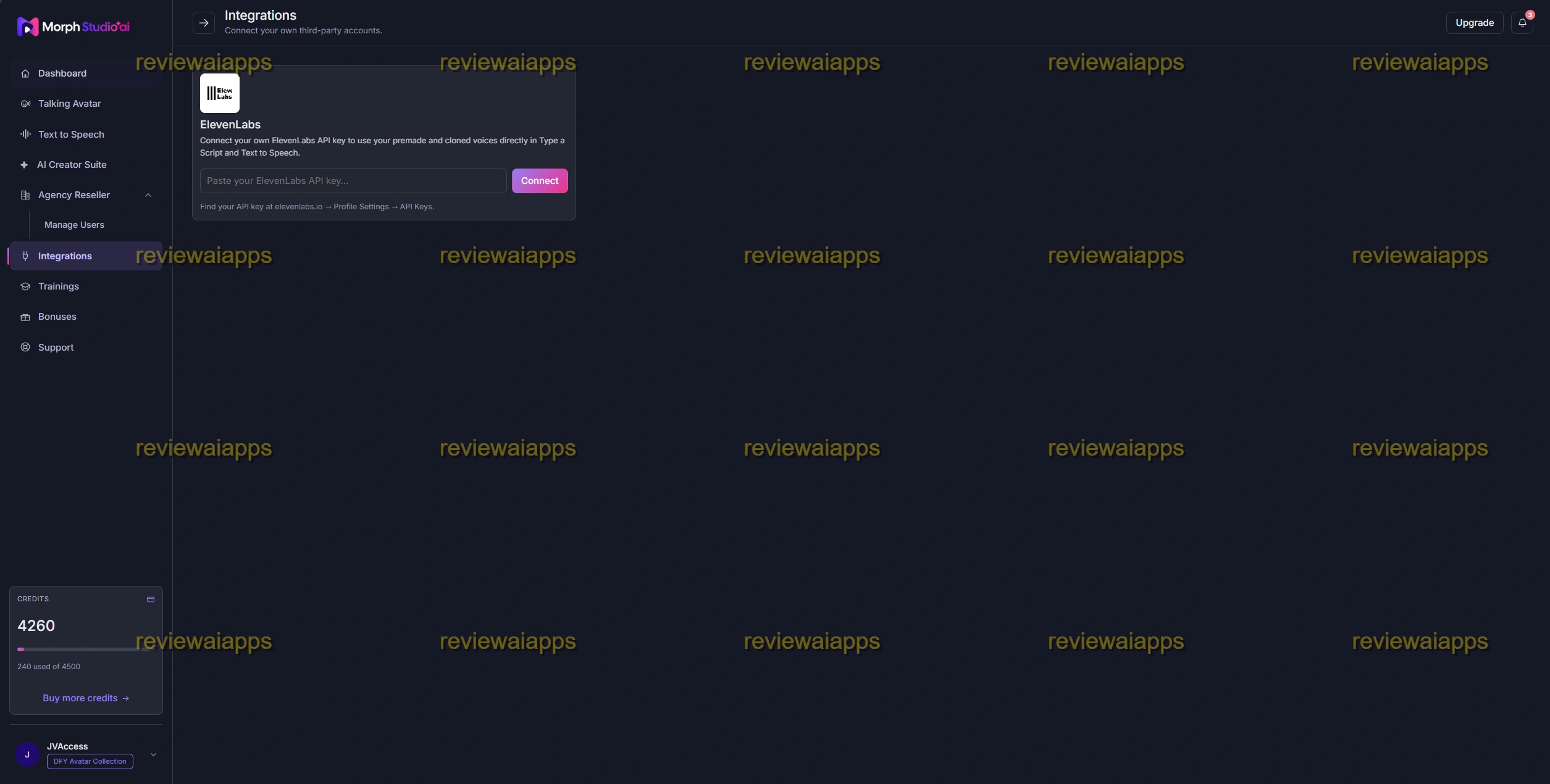
Of course, you might want an integration with Eleven Labs to have natural accents.
It sounds like a good generic spokesperson performance, not something you have deeply directed, which is good to know since that is how the Performance Director feature is described in the marketing.
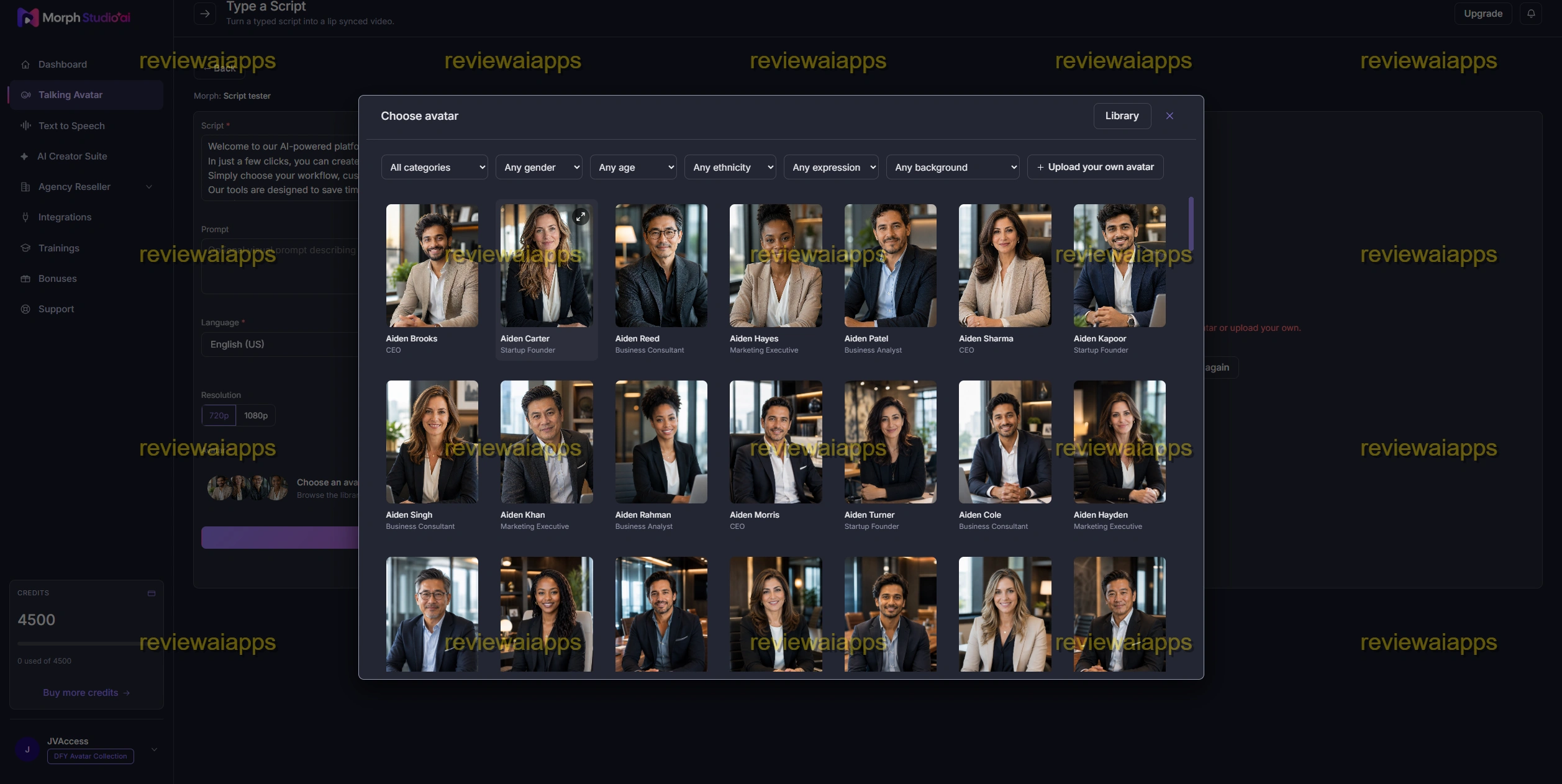
What ships by default is a solid performance not one that responds to fine creative direction as the sales copy suggests.
Here is where the real limits of the Front End appear: the system of credits. The Talking Avatar tool and the Text to Speech tool are separate tools but share the same credits balance.
Both tools use credits at the same rate (about 5 credits for every second of finished audio or video). Do the math on the Front End's 3,000 credits and you get 10 minutes of total video or voice output, ever, on the 37 dollar tier.
Add in the additional 6,000 credits from the Pro upsell and the combined lifetime total is about 30 minutes across both tiers. Credits are only deducted when a generation does succeed, which is a fair, consumer-friendly detail, but the underlying ceiling is real regardless.
There are two features that behave differently than they are described in the sales copy and it is worth knowing about both of them before buying.
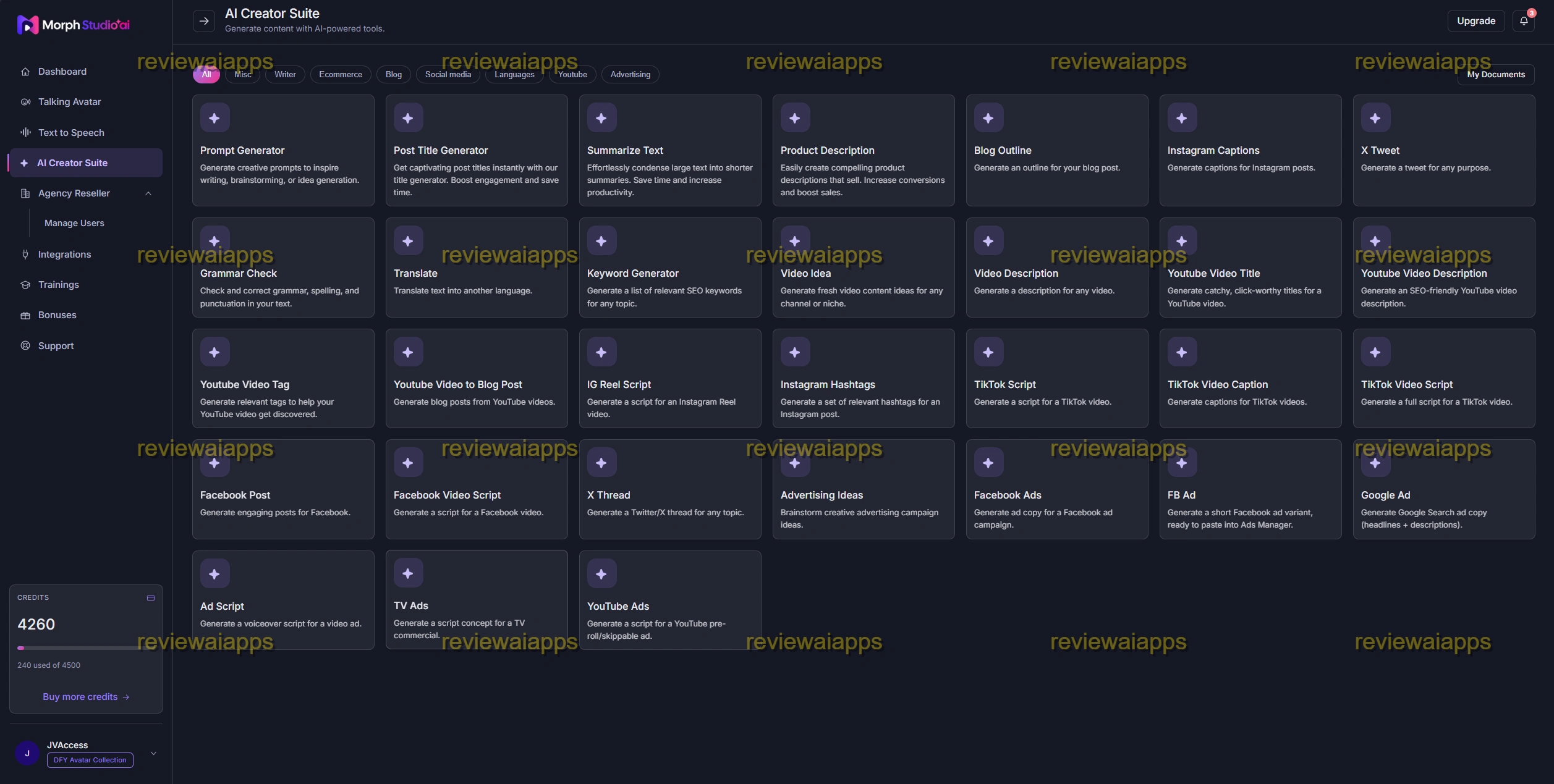
First, the content tools in the Creative Suite don't consume any credits at all, which I verified directly by creating a TikTok script and a caption set without any change to the credit balance.
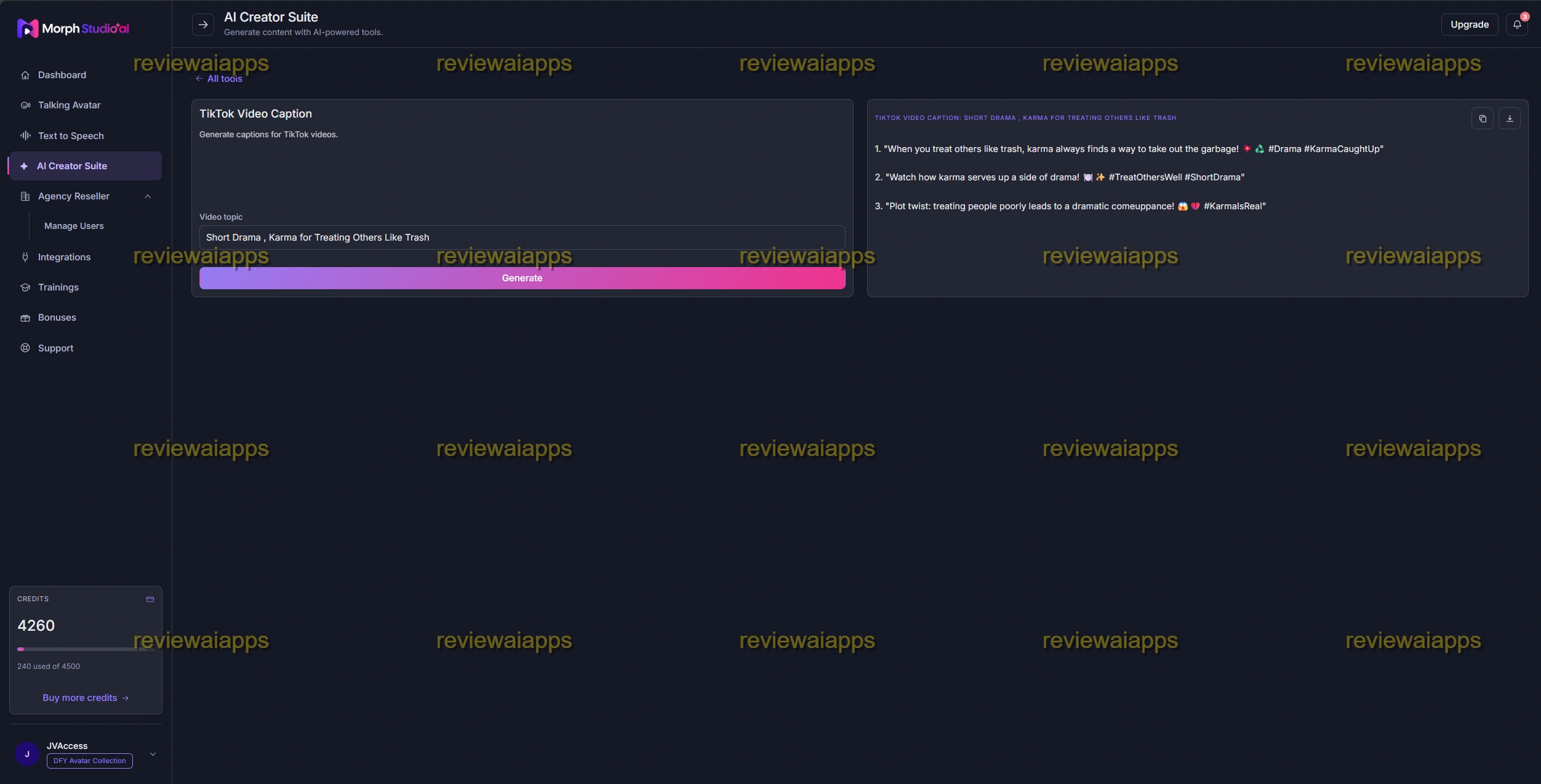
So that component of the product is truly unlimited.
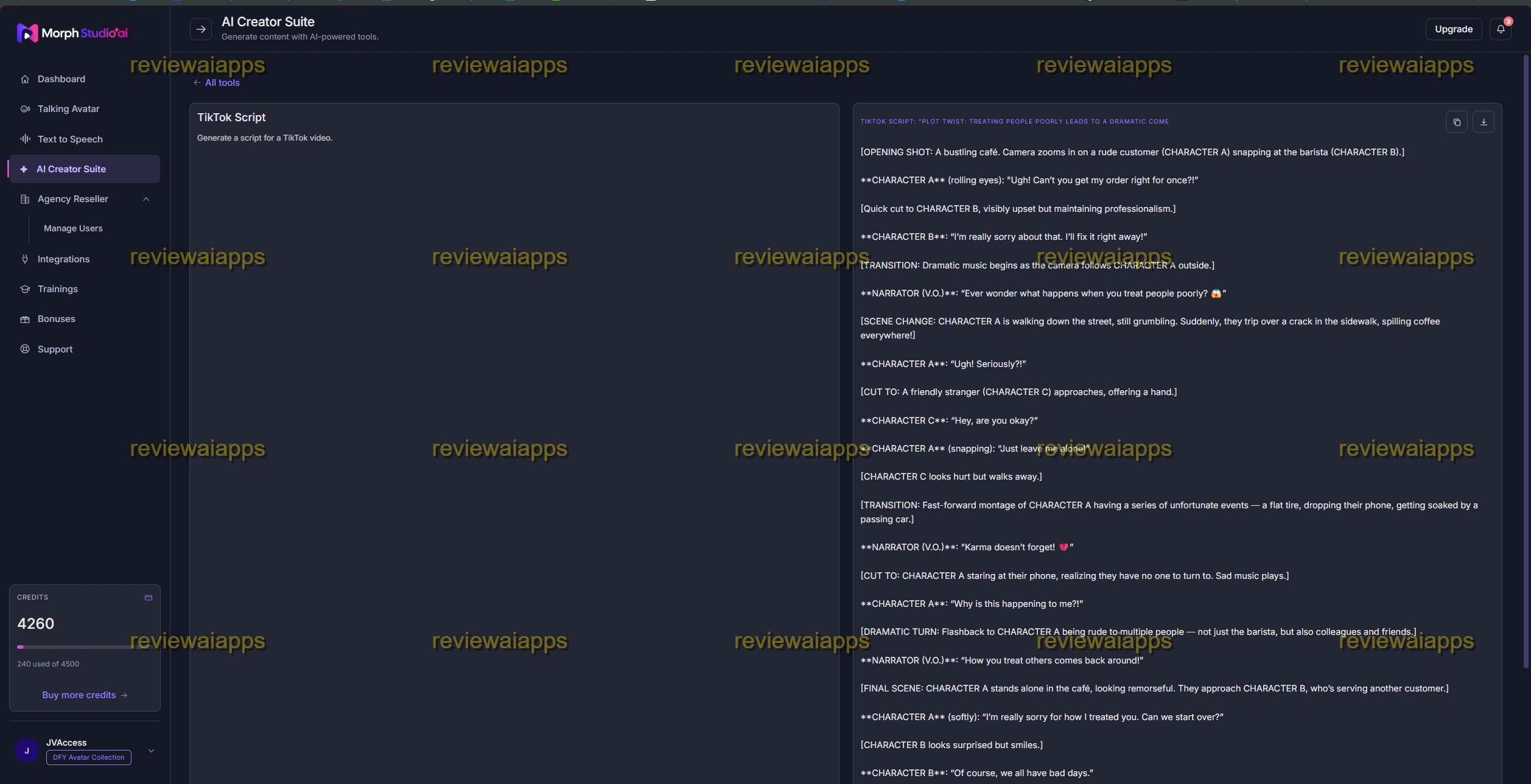
This is logical from a cost perspective , text generation is a lot cheaper to run than video rendering , so you can give that half of the product away without limits and it does not put the same strain on the vendor as video generation does . Secondly, the Pro tier advertizes an ElevenLabs voice option, but it is not really included. The product's own integrations page says straight up that you have to plug in your own ElevenLabs API key to use it, meaning you have to have a separate account with its own separate cost, not something that's included in the one-time MorphStudio AI payment.
Resolution also acts a little different in practice than the tier descriptions suggest. Technically, the 1080p option is visible on the generation screen before an account has purchased Pro, which is either an interface detail that has not been fully locked down for launch, or just how a reviewer-level account is provisioned, but expect the marketed 720p ceiling to apply rather than assuming the higher resolution toggle will work for them, a Front End buyer.
The truthful take on the marketing
The key argument in MorphStudio AI's launch materials is that other AI avatar tools don't have voice, natural motion and commercial rights, and that this software is the first to get all three. That framing doesn't hold up to the tools people actually compare this category to. The existing AI avatar platforms offer voice, lip-sync, natural motion, and commercial usage rights on their paid tiers, so this claim only really works against the cheapest static face-swap novelty apps, not the real competitive set MorphStudio AI is entering. Statements such as a perfect lip-sync or the biggest leap the category has taken since the first appearance of face-swap apps are the sort of unfalsifiable superlatives that seem to crop up in almost every launch in this space, and read as marketing flourish rather than something to take literally.
This is where the framing gets really misleading instead of just enthusiastic, and it's the central question this MorphStudio AI review keeps coming back to. The Front End is far more generous than it is, presenting the allowance as 3,000 credits rather than as the 10 minutes of usable output it actually equals. That gap matters most for the pitch of the top upsell which runs an agency for up to 50 client accounts. The realistic lifetime capacity, even combined with the Pro tier's additional credits, is around 30 minutes of standard content, not a serious foundation for ongoing paid client work at any scale.
The issue of one-time price vs. monthly services
That's the right question to ask of any one-time priced tool that is positioning itself against established subscription competitors. Monthly AI avatar platforms tend to run anywhere from $19 or so up to well over $100 a month before enterprise pricing kicks in, and that's because every video created is going to use up real, ongoing rendering compute on the vendor's side. That funds it forever through a recurring fee.
That same per-video cost can't be funded forever with a one-time payment of somewhere between $37 and a few hundred dollars, depending on how many upsells you take, for a truly heavy user. The credit system supports this rather than contradicts it. This is not unlimited use masquerading as a one-time deal. This is a prepaid usage allowance, sized to something on the order of 10 to 30 minutes of lifetime output depending on tier. That's a fair amount of value for the money for someone looking to put together a few promo or demo videos. The math doesn't add up for anyone reading the agency and reseller upsell literally and planning to service dozens of paying clients on it without buying additional credits down the line, and the documentation doesn't spell out what that would cost.
Or, in other words, the fair comparison isn't MorphStudio AI versus a monthly subscription tool but MorphStudio AI versus buying one month of one of those tools and then using it to produce a batch of videos and then canceling. In that context, a one-time cost of $37 to $344 for about 10 to 30 minutes of finished output is a reasonable trade for someone who only ever wanted a short burst of use in the first place. But the moment a buyer expects it to behave like an ongoing production subscription, it stops being a reasonable trade, because that's a use case the pricing model was never built to support.
What is really fair on here...
Not everything is oversold about MorphStudio AI. The core lip-sync and avatar animation work and create a usable video, not a broken demo. You only pay for credits when a generation actually works, so a failed render doesn't silently eat into an already tight budget. This is a real plus for the product, as so much of the launch pitch depends on content variety, and the Creative Suite's content tools are not artificially capped, but unlimited. The 37 dollar Front End includes commercial use rights rather than being reserved for a higher tier, a truly competitive detail against some rivals who gate resale and client use behind their most expensive plans. And the 30 day money back guaranty, buried on a legal page and not promoted on the sales page, is a way for buyers to really test their own usage pattern against the credit ceiling before committing more money to the upsells.
Who this is really for
If you want to make a few talking-head videos without a camera, a script reader or any video editing skill of your own, MorphStudio AI is a reasonable fit, especially for product demos, social content or course intros where a small library of clips will do the trick. It's also a good fit for someone who mostly wants the writing tools of the Creative Suite and sees the avatar video feature as a bonus, not the main draw, since there's no credit ceiling on that half of the product. It's a worse fit for anyone taking the agency, client-resale pitch at face value, or anyone expecting ElevenLabs voice quality bundled in at no extra ongoing cost. Buyers who expect heavier or repeated use should count minutes, not credits, before deciding which tier to buy, should budget separately for ElevenLabs if that voice quality is important to them, and should decide ahead of time whether the Bundle Deal or the a la carte route gets them to the features they really want for a lower total cost, as the two routes do not unlock exactly the same things for the same money.
Final verdict
According to this MorphStudio AI review, the software is a real, working talking-head avatar software instead of a hollow launch. It does lip-synced video properly, boasts a truly unlimited content writing suite, and backs itself up with a real refund window.
What it doesn't deliver in its own marketing is in the framing of scarcity and scale: the credit system is a capped, light-to-moderate-use allowance disguised as an enterprise subscription platform, the flagship agency pitch is poorly supported by the actual numbers, and one of its headline upgrades depends on a separate paid account it never tells you is separate. Buy it for what it is, a capable tool for a modest number of presenter style videos, and it's fair value. Buy it expecting it to replace a monthly production pipeline or fund a client agency on its own and the credit math will catch up to you long before the results do.