
FableFox AI Review
Can One AI Agent Really Replace 300+ Freelance Tools?
Here's your text with structural formatting only — headings, paragraph breaks, and one list where the copy clearly reads as a flattened list. Not a single word changed; copy straight from below.
Every few weeks a new "AI agent" launch promises to replace an entire agency in a single dashboard and FableFox AI is the latest to make that pitch. The tool, developed by Firas Alameh, trains a custom AI agent on any business—feed it a website link, a document, or a few notes—and then claims to unleash that trained agent on copywriting, video, voiceovers, images, SEO, and chatbot building. The premise is simple: instead of managing a dozen subscriptions, you have one agent who already knows your business and can generate the assets that business needs.
It is an attractive proposition for freelancers, agencies and small business owners tired of piecing together a variety of separate AI tools. But launch pages are written to sell, not to inform. So before you decide whether FableFox AI belongs in your toolkit, it's worth walking through exactly what you get, what it costs at each stage, and where the marketing outruns what the product actually shows.
How FableFox AI Prices Its Funnel Process
FableFox AI is not a one-time purchase. Like most software launches on this type of platform, it's divided into a front-end product, and a series of one-time upgrade offers, along with a separate bundle option that rolls several of those upgrades into one purchase. Anyone considering this tool should be aware of both paths before buying, as the front end only is a very different product to the fully loaded version.
Front-End: FableFox AI Advertisement
The entry point is $27-$37, and rises as the cart-open window progresses, with a small discount coupon knocking a few more dollars off during launch. For that price you get custom knowledge agent training for a single client workspace, access to the platform's advertized 300+ asset generators, copywriting, video, voiceover, image, design and SEO studios, and a chatbot builder. The front end also includes claiming routing to "every top AI model via OpenRouter, including Claude Fable 5," as well as commercial rights to sell the assets you generate, full onboarding training, and ten launch bonuses. This is the tier that most buyers will see first, and it's also the most limited: one trained agent and one client workspace, with the deeper automation and unlimited-use features behind the upgrades below.
Special offer
If you know you want the full platform instead of piecing it together with upgrades, FableFox AI also has a Bundle Deal for $347 that's perfect for buyers. This is meant to bundle the front end with the upgrade tiers below into one purchase, which is generally the better value if you already expect to need the higher tier features — buying the OTOs individually adds up quickly, and OTO1 alone carries a $1,997 sticker price on its own page. The bundle is listed as a flat, single price instead of being broken down by tier, so buyers should still double-check at checkout to make sure the bundle includes the exact upgrades they want before assuming it lines up with every OTO below, feature for feature.
OTO1: FableFox AI Max – $1997
The first upsell is called "the conversion upgrade" and it is priced at $1,997 one-time which is significantly higher than anything else in the funnel. Includes 100+ emotion based AI voices, video sales letter script engine, 100+ pre-trained chatbot agents for sales and support, AI talking avatar studio and unlimited client projects with full commercial license. This is the tier that takes FableFox AI from an asset generator to more of a client-service platform, but it's also the single most expensive item in the entire funnel, more than fifty times the front-end price, worth sitting with before clicking through.
OTO2: FableFox AI Unlimited
The second upsell removes the front end usage caps, giving you unlimited video, voiceovers, images, copywriting, design, SEO tools, automation, and client workspaces, plus an unlimited commercial license to resell without limitation. The page doesn't list any specific dollar figure, and only lists pricing at checkout, meaning buyers would need to click into the offer itself to see how much this upgrade costs compared to the others. If you intend to use FableFox AI for more than one client, this is the most critical tier for functionality, considering that the front end restricts you to a single workspace.
OTO3: FableFox AI VSL Generator
This upgrade is a dedicated script-writing engine for video sales letters: 15+ sales frameworks, an emotion-based messaging engine, script generation in 25+ languages, and a commercial license, which the page says allows buyers to sell finished scripts for $100 to $300 each. Like OTO2 there is no price listed on the page itself. Also, the guaranty language on the page is inconsistent, with both 14-day and 30-day money-back windows mentioned in different places, so anyone relying on the refund policy for this specific upgrade should check the actual term at checkout rather than trusting the sales page.
OTO4: FableFox AI Klient Finder
The final upsell addresses the most common objection to "sell AI services" offers: getting clients. It scans freelance job boards in real time, understands what the client is looking for and automatically writes proposals for each. Similar to OTO2 and OTO3 the price is not displayed on the page, only shows up when you checkout. The other funnel pages don't have an earnings disclaimer on them like this page does. It also has the same 14 day/30 day guaranty inconsistency as OTO3.
What FableFox AI Really Does
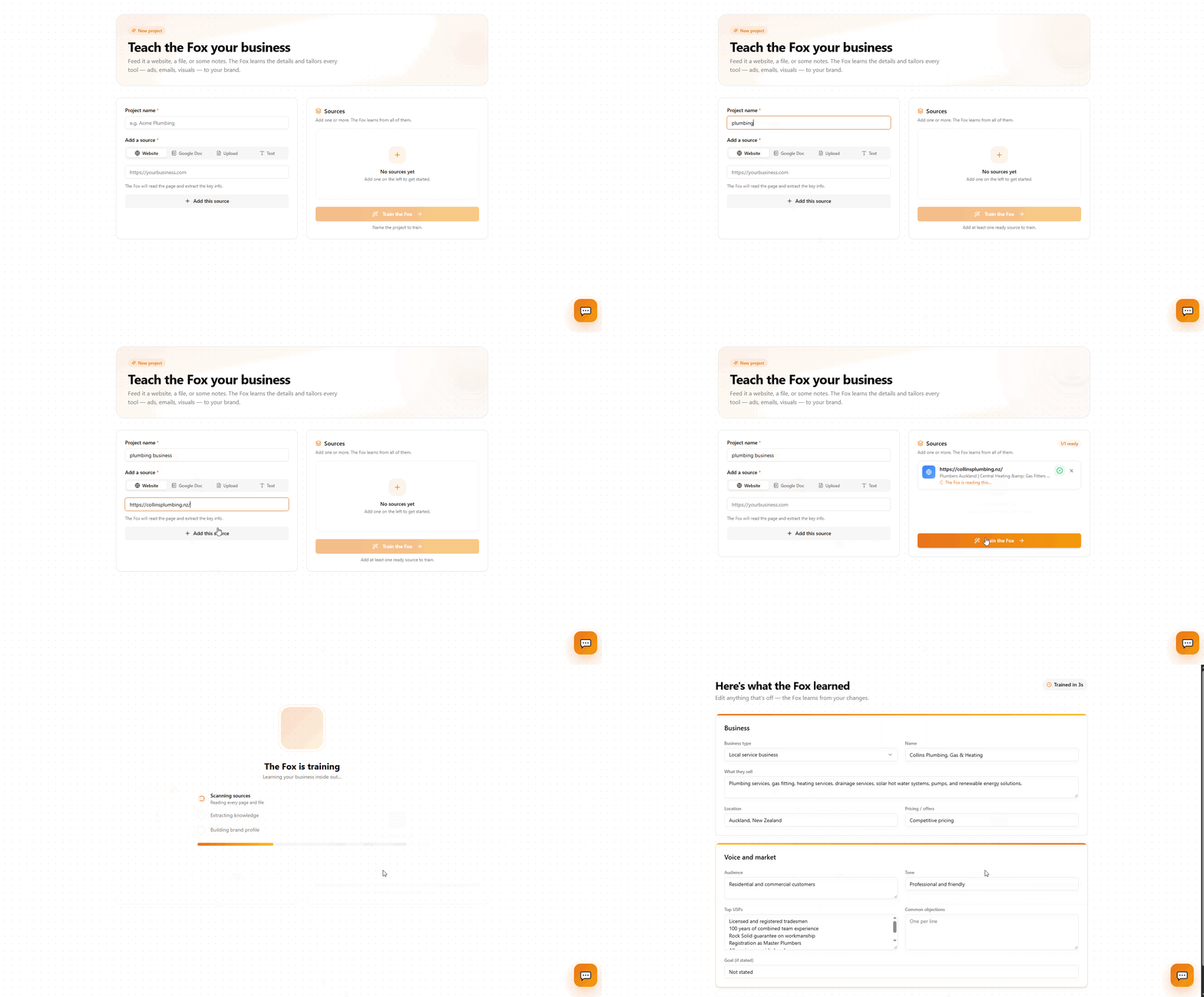
Take away the funnel, and the basic idea is simple: you feed the platform a source — a business website, an uploaded document or typed notes — and it builds a trained agent around that business context.
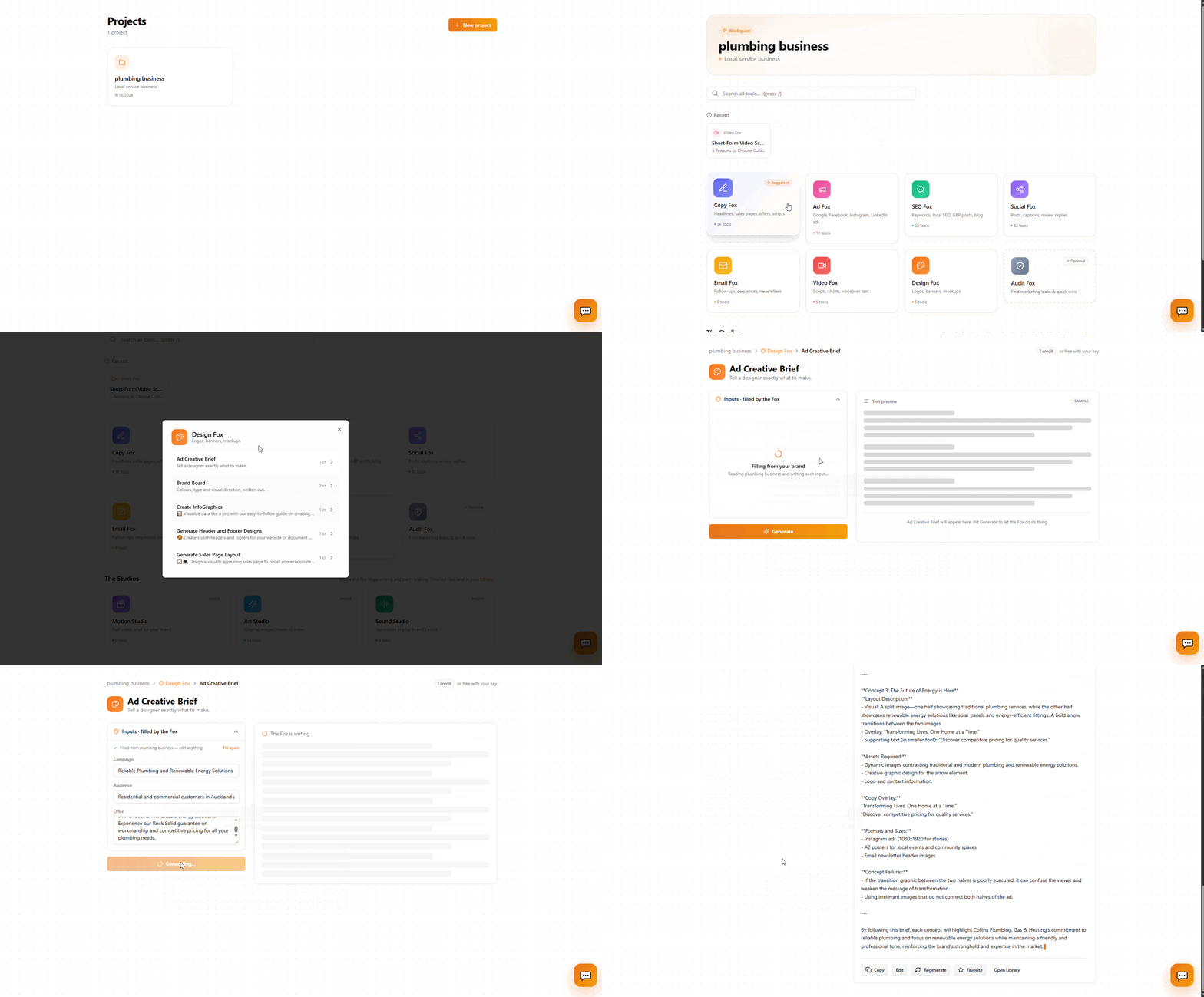
The member dashboard then organizes its tools into named categories that act almost like specialized sub-agents. Here's the breakdown:
Copy Fox for headlines, sales pages, offers, and scripts
Ad Fox for Google, Facebook, Instagram, and LinkedIn ad creative
SEO Fox for keywords, local SEO, and Google Business Profile posts
Social Fox for posts, captions, and review replies
Email Fox for follow-ups, sequences, and newsletters
Video Fox for scripts and short-form video
Design Fox for logos, banners, and mockups
Optional Audit Fox that scans a business for marketing gaps
In addition to these categories, there are three production studios (Motion Studio for actual video output, Art Studio for original images, and Sound Studio for voiceovers in a chosen brand voice).
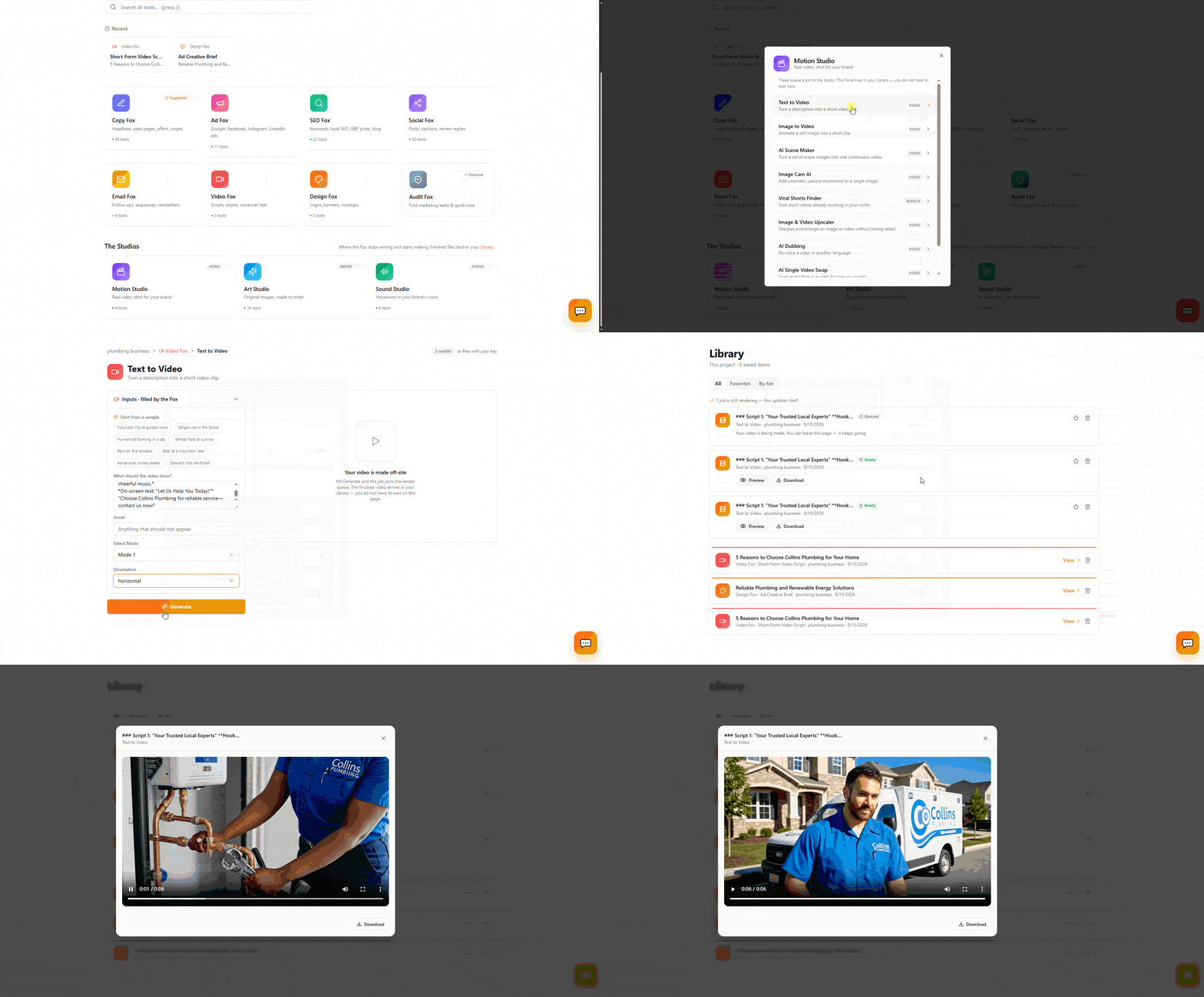
In practice this means that the platform is less a single generator and more a set of narrower tools behind a trained knowledge base, which is a sensible structure for the kind of client-service work the funnel is built around.
How the training process really works
It's worth walking through the onboarding flow, because it explains how the platform can credibly claim its output is "tailored" and not generic. When you create a new project you are asked to name it and then add at least one source, either a website URL, an uploaded document, a Google Doc or simply typed notes. The platform reads that source and pulls out what it calls the key business details — services offered, tone, positioning, that sort of thing — before the agent is considered trained. You can add multiple sources to the same project and the interface notes that the agent learns from all of them together, which means a more complete project (website plus a few supporting documents) should generate more accurate output than a single URL, in theory.
Once a project is trained it's the context that all the tools in the dashboard are pulling from. If you ask Copy Fox for a sales page, it should already know the services and tone of the business, not have to explain that in each prompt. That's the real mechanical advantage FableFox AI is selling—not that any one tool is unique, but that the same trained context follows you across dozens of narrower tools, instead of resetting every time you switch between them.
When Marketing Gets Ahead of the Product
The front end page boasts of "300+ asset generators" but the dashboard's own tool categories don't add up to that number. If you count generously, there are about 150 individual tools named inside the actual member area. Copy Fox, Ad Fox, SEO Fox, Social Fox, Email Fox, Video Fox, Design Fox, and the three studios. It's a big difference from what the sales page promises and what the product interface actually delivers. Not the kind of cosmetic rounding difference that shows up on most launch pages.
The branding of "Claude Fable 5" also deserves another look. The front page mentions routing to "every top AI model via OpenRouter, including Claude Fable 5" — OpenRouter is an actual service that offers access to models from various AI providers, so the underlying claim of multi-model routing is plausible. But "Claude Fable 5" itself is not a published model name from Anthropic, which makes it unclear whether this is a custom-tuned model FableFox built on top of an existing base, a mislabeled listing, or just a marketing name to borrow Claude's reputation. If you're purchasing this tool in hopes of being able to use an official Claude model, you might want to take that claim with a grain of salt until FableFox clears it up.
The scattered income claims all over the funnel – "$5,000 from one client", "$80,000 a month from recurring clients" and even a claim that VSL scripts can be sold for "$100 to $300 each" – are the usual best case scenario for a launch page, with no methodology or verification. The largest income numbers are on the front-end page, which does NOT have an earnings disclaimer. The Client Finder upsell does. Just that one inconsistency shows that the copy across the funnel was not written with equal care.
Finally, three of the four upsells do not display any price on their sales pages and the guaranty terms on two of them directly contradict themselves on the same page. Neither is a deal-breaker on its own — checkout-only pricing and inconsistent guaranty copy are common enough on this style of launch platform — but they do mean a buyer can't fully map out total funnel cost or refund terms without clicking all the way through to checkout, which is worth knowing going in.
Who FableFox AI Is Really For
Those gaps aside, the core use case is reasonable. Freelancers and small agencies already creating marketing assets for their clients – ad copy, social posts, email sequences, basic design work – could get real value from consolidating that work behind one trained agent instead of juggling five or six different subscriptions. The tiered structure also makes some sense functionally: the front end is a workable starting point for a single client or business, and the upgrades exist for people who plan to scale that into a service business with multiple clients, unlimited output, and lead generation built in.
It's far less applicable to those who expect the front-end price to provide the full platform. The base tier has only one workspace. Some of the more compelling promises such as unlimited clients, unlimited output and automatic client finding are all locked behind upgrades that cost more than fifty times the entry price (OTO1), or are undisclosed until checkout (OTO2 to OTO4).
Also, one needs to be realistic about the learning curve that comes with eight tool categories plus three production studios. This isn't a one-click generator that you open and immediately know how to use, it's more like a small software suite and to get real value out of it one needs to spend time learning which tool handles which task and not expect one agent to know the right answer every time. That's a few hours of real exploration before buyers from more straightforward, single-purpose AI writing tools can decide whether the platform is worth its price.
How the Funnel Stacks Up Against Similar Launches
Anyone who regularly follows this category of software launches will recognize the shape of this funnel immediately: a low-cost front end to get a foot in the door, a steep flagship upgrade, and a handful of narrower add-ons that unbundle features a more established SaaS product would simply include. Where FableFox AI differs from a lot of similar launches is not in the pricing structure itself but in the size of the gap between the front-end price and OTO1. The \(1,997 one-time upgrade is higher than most in this style of platform, with flagship upsells more often falling in the \)67 to $297 range. That doesn't mean it's overpriced necessarily, for what it offers — unlimited chatbot agents and an AI avatar studio are real production costs if you're running them at scale — but it does mean the "starts at $27" headline is doing a lot of heavy lifting in hiding what the fully-featured version actually costs.
What's also interesting is what the funnel doesn't have – there's no visible monthly subscription tier being sold alongside the one-time options, which is a point in its favor over launches that quietly convert buyers to recurring billing after a promotional window. Whether that will be the case after the official cart closes on Sept. 22 is something only time will tell, as one-time-fee AI tools have a well-documented history of introducing usage-based billing once launch pricing ends and the underlying API costs catch up with what a one-time fee can sustainably cover.
Warranty & Refund Conditions
FableFox AI has a 30 day money back guaranty on the front end and any refund requests are handled by the vendor support team during that time frame. As is common on this type of launch platform, buyers who don't get resolution directly from the vendor can also escalate a refund request through the platform's own dispute process. Two of the four upsells claim they have both a 14 day and a 30 day guaranty window on the same page so anyone buying OTO3 or OTO4 specifically should double check the actual refund term at checkout and not assume it is the same as the front end.
Final decision
FableFox AI is a really good idea in a pretty aggressive launch funnel. The idea of training one agent on a business and then generating consistent, on-brand assets across copy, video, design, and SEO is a real time saver for the freelancers and small agencies it is built for. The dashboard behind the marketing does offer a coherent, organized set of tools rather than a single thin generator. Where it stumbles is transparency: a tool count that doesn't align with what the product actually ships, an unexplained premium model name, income claims that rely on best-case outliers, and pricing that's hidden on more than half the funnel until checkout.
That doesn't make FableFox AI a scam, but it does make its sales copy something that needs to be read more carefully than its dashboard suggests. If you're already doing the kind of client work that the platform is built around, then the front end is a low-risk way to test the trained-agent approach to see if it fits your workflow. The Bundle Deal is only worth considering once you're sure you need the deeper, multi-client features it's meant to unlock. If you are drawn to the income numbers on the sales page, you should view them the same way you would any other launch page testimonial: as a best case, not a baseline.