
AI Trading Engine Review
Inside Sean Donahoe's Wayland-Powered Trading System
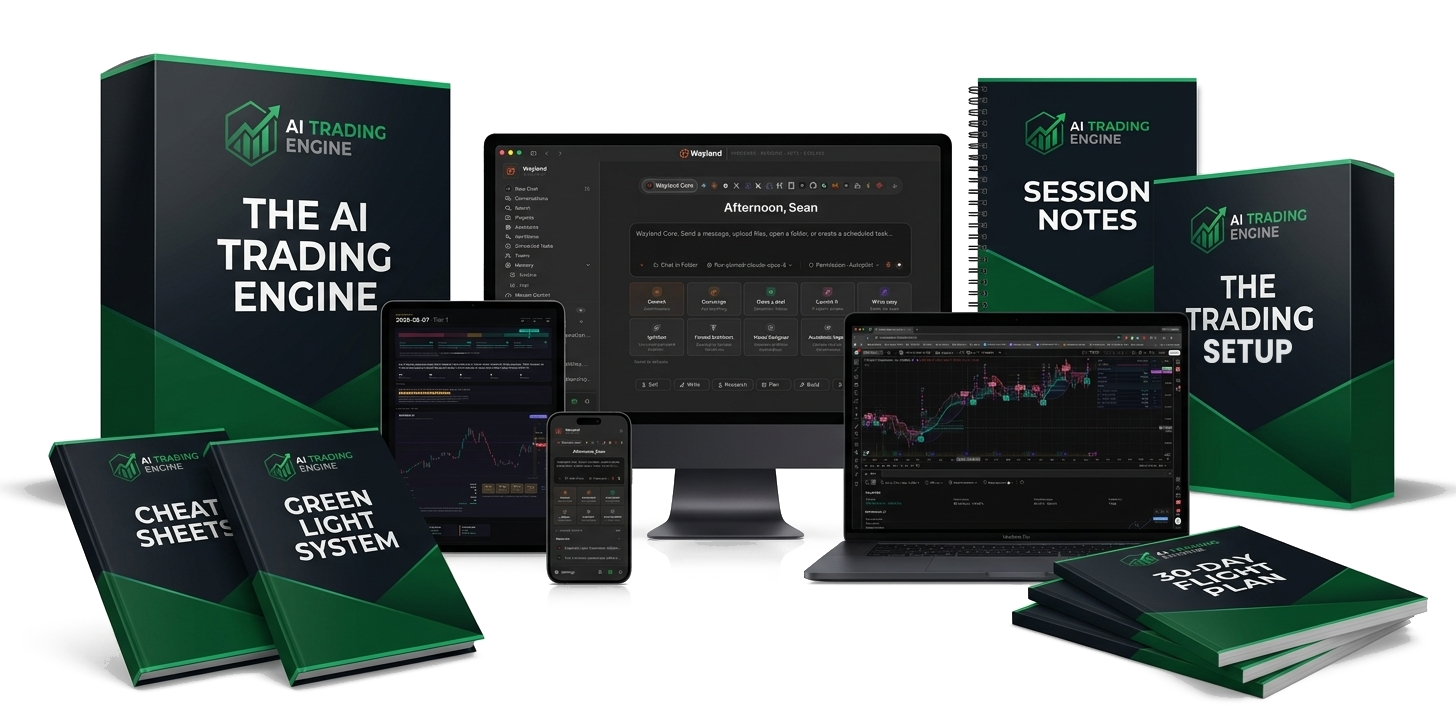
Somewhere along the twenty-seven years Sean Donahoe spent trading his own money, he apparently decided that the main problem facing most retail traders is not a lack of information. It's a lot of it. Charts on Charts, 12 indicators all pointing in different directions, and a creeping feeling that somewhere in all that noise is 1 good trade you're too overwhelmed to see clearly. That's the premise behind his latest release, The AI Trading Engine, a system built around an AI he calls Wayland that does the overnight legwork and hands the trader one ranked decision each morning, reasoning attached.
Donahoe is no stranger to this space. He is a longtime digital product creator that has reportedly sold over twenty-five million dollars in product sales and is launching this one through his company, ADD Marketing Group, LLC. The AI Trading Engine is being marketed less as a magic signal generator and more as a decision-support system: something that narrows the field every nite so a trader wakes up with one thing to evaluate instead of forty.
New clothes, same old problem. Retail traders have never lacked for data or tools, and the last decade has buried them under both. Free charting platforms, endless YouTube breakdowns, and a constant stream of social media calls have made it easier than ever to find information, and harder than ever to know which piece of information actually matters on any given morning. The pitch behind the AI Trading Engine is built directly against that fatigue, as a filter and not another source of noise.
✅ Trains long and short, on up days and down days alike
✅ Practice first on TradingView's paper account — zero real capital at risk
✅ Runs on your own computer — no mandatory monthly fee on the core system
✅ Live 5-day guided training walks you from setup to your first graded week
What the AI Trading Engine Is Really
The AI Trading Engine really revolves around Wayland, an AI that overnight reviews seventy-four stocks while the trader sleeps, and in the morning produces a single, ranked trade idea, along with the reasons behind the pick. The system is designed explicitly for research and analysis, but not execution. Wayland does not trade on its own. The final call, the click that sends an order to the market, is up to the human at the keyboard.
That distinction is important to the positioning of the product. This is offered as a tool that removes the guesswork from idea generation and puts the trader back in control of the decision itself, rather than an automated bot that promises to trade on autopilot. New users are also encouraged to use TradingView's practice account for their first time using the system, so the first trades are made on paper, not with real capital as the trader gets comfortable with how Wayland's picks play out.
Another interesting feature is that The AI Trading Engine is installed locally on the buyer's own computer instead of being in the cloud, and the core software itself does not charge a mandatory monthly fee. One of the more distinguishing parts of the pitch is that one-time structure on the base product for traders who have become wary of stacking subscription costs on top of their trading capital.
Inside Wayland: The Features
The feature set depends largely on the amount and depth of processing. Wayland is a stack of 176 workflows, 73 assistants, 26 specialist teams and more than 2,200 individual skills, all working together to generate the nightly analysis, the vendor says. The system is built to operate in both directions, hunting for opportunities on up days and down days equally, taking long or short positions depending on what the overnight analysis indicates.
The output is meant to be simple, a one-page morning brief ranking the best idea of the day, and explaining how the AI arrived at that idea, in plain language. That's a purposeful contrast to the raw indicator soup many retail platforms hand traders, then leave them to interpret on their own. The idea is that a trader can get the brief with a cup of coffee, read a brief explanation as to why a particular stock made the cut that morning and decide within a few minutes if it fits their own risk tolerance and account size, rather than spending the first hour of the trading day scanning dozens of charts themselves. The system runs on the buyers own machine, so they own and control it, rather than rent it, and the paper-trading step is built in so that no one has to trust the system with real money before they've seen how it performs firsthand. That ownership framing is a purposeful counterpoint to the increasing number of trading tools pitched simply as cloud dashboards, where the analysis goes away the moment a subscription lapses. In this case, the software itself remains installed and usable on the buyer's machine, no matter what happens with any of the optional upgrades layered on top of it.
The Live Five Day Training Course
Buyers of the core course aren't just getting software and a manual. They are taken through a live, five day training that runs Monday through Friday at eleven in the morning Eastern, taking them from a blank install to their first graded week with the system. This is the way the vendor has it set up.
Day 1: Installation and Setup
Training starts on Labor Day with getting Wayland installed and running on the buyer's own computer. This is just the technical foundation day, getting everything working before any of the live market activity begins.
Day Two: First Market Morning
It's the first time buyers get to see the system in real action. Overnight analysis is done by Wayland and the group walks through a real morning brief, including how the ranked idea and its reasoning are presented.
Day Three: Get it Done
Day Three: Buyers make their first trade. They use the paper-trading account, not real money, to apply whatever Wayland came up with in the previous day's analysis.
Day Four: Expansion
We now move on to building a repeatable routine in the training, adding a trading journal and scoreboard so that buyers can begin to track decisions and results as the week progresses.
Day Five: Grading Week and Q&A
The live portion concludes with an open question and answer session with Sean Donahoe himself, plus what the vendor calls a grading week, where buyers have a chance to see how their first run with the system actually went.
The AI Trading Engine Behind Behind
The name behind this launch is Sean Donahoe, releasing it through ADD Marketing Group, LLC. His background is listed as having twenty-seven years of active market experience combined with a long career as a product creator, with more than twenty-five million dollars in cumulative product sales listed as part of his track record. That history is doing a lot of the credibility heavy lifting in this launch. This is not some faceless storefront trying out a new idea for the first time. It is a known commodity in the trading education space taking his own methodology and putting it into a structured, guided system with a live cohort experience built around it. Buyers trying to decide whether to trust a new launch typically look for this kind of signal: A seller with a public history that predates the current product, not a page that popped up out of nowhere with no way to check who's actually behind it. That doesn't confirm any of the specific claims made about Wayland's performance, but it does mean there's a real person and a real business attached to the product, which is a meaningfully different risk profile than an anonymous one-off launch.
The Real Benefits You Can Get
Strip away the marketing lingo and you get a pretty simple appeal. Before you even wonder how accurate that idea will prove to be, the promise of one clear, explained idea a day is a real relief valve for a trader overwhelmed by conflicting indicators. It means the trader isn't glued to a screen trying to process seventy-four stocks in real time themselves and does the heavy analytical lifting overnight. The paper trading on-ramp takes the pain out of learning to trade for anyone who's been on the sidelines because live trading felt too risky. And the fact that it runs locally without a subscription requirement on the core product removes one of the more common objections traders have to software tools in this category, where a monthly fee keeps compounding whether or not the tool is actually earning its keep that month. Another built-in psychological benefit is something easy to overlook: the system gives a trader a chance to get comfortable with being wrong without it costing them anything, by forcing a paper-trading stretch before anything touches real capital, a step a lot of self-taught traders skip entirely and pay for later.
Pricing and the Offer Ladder
The AI Trading Engine is not a flat one-time purchase. It's a funnel with a front end course and multiple optional layers of deeper access, strategy and support. Read the full bill here.
● The AI Trading Masterclass, which is the front end course and the core Wayland setup, goes for forty seven dollars.
● Inside Edge is a recurring add-on that is twenty nine dollars a month and comes as an order bump at checkout.
● The first upsell is Red Carpet VIP, which is ninety seven dollars.
● The second upsell is Inner Circle, which is one ninety seven dollars.
● There's also the AI Profit Protocol, an intensive add-on on the advanced application of the system, which cost four hundred and ninety seven dollars.
● You can get The Complete AI Trading Engine Bundle which features the Masterclass, Red Carpet VIP, Inner Circle and The AI Profit Protocol for the same price as the intensive alone, four hundred ninety seven dollars, with one purchase.
The funnel logic is fairly standard for how launches in this space are built with this structure. The front end is there to bring in a buyer at a low friction price point. Then each upsell is positioned as a natural next step once the buyer has already bought into idea. The bundle is there as a side track for buyers that would prefer to make one decision rather than four, priced in a way that makes it a clear discount against buying everything separately at full price. None of that is odd, or a red flag by itself. You just need to think of it like a funnel and determine how far down the funnel you want to go.
How to Buy: 2 Ways to Purchase
There are two different ways for buyers to get into The AI Trading Engine, and which makes sense depends on how much of the system someone already knows they want.
The first option is to purchase the main offer, and then choose any upsells individually. The forty seven dollar Masterclass can be bought by a buyer by itself and then each additional offer, Inside Edge, Red Carpet VIP, Inner Circle and The AI Profit Protocol, is offered one at a time. Each can be accepted or declined separately, so a buyer only pays for the specific pieces they actually want. This allows the most control over spending, but can end up costing more in total for anyone who eventually decides they want most or all of the add-ons, since each is priced separately at full price along the way.
The second way is to buy the Bundle Deal outright. Instead of going through the offer sequence step-by-step, a buyer can just buy The Complete AI Trading Engine Bundle for four hundred ninety seven dollars upfront. It skips the front end offer and some of the individual upsells. You get the Masterclass, Red Carpet VIP, Inner Circle, and The AI Profit Protocol all in one purchase at a combined price that is much less than the cost of those pieces if purchased separately for full price. If you know you want the whole system and not just to test the waters with the entry level course, the bundle is the more economical route. It's also worth noting that Inside Edge, the recurring monthly add-on, sits outside both of these bundled paths and is only ever offered as the checkout order bump, so choosing the bundle route doesn't automatically add that subscription either.
What the sales page WON'T tell you
A critical reading of the promotional copy for The AI Trading Engine reveals some things worth knowing before buying. The greatest gap is what is not said, not what is said. Nowhere in the marketing will you see any win rate, drawdown figures, backtests or independently verified trading results associated with Wayland's picks. That's an important silence for a product sold on the basis of its analytical output alone. Reading seventy four stocks overnight, and handing back one decision with the reasons attached, is memorable copy, but it is not evidence that the decisions are good ones, and buyers should not confuse a catchy phrase with a proven track record.
Wayland's own figures about its internal architecture – 176 workflows, 73 assistants, 26 specialist teams and 2,200+ skills – sound precise, but none are independently verifiable, nor linked to an external standard. More components doesn't necessarily mean better decisions and there's no way for a buyer to verify what those numbers actually mean under the hood. The vendor's own credentials, twenty seven years in the markets and twenty five million plus in product sales, are self reported on the sales page itself. These may be true, and Donahoe does have a long public history in this space, but they are unsubstantiated claims, not independently sourced facts.
There's a real tension in the no-subscription pitch that's worth understanding, especially given how much cheaper this product is than the monthly platforms it's implicitly competing with. Institutional-grade research tools? The kind that stream real-time market data and have dedicated cloud infrastructure running 24/7? They cost from a hundred to several thousand dollars a month, because that fee covers continuously licensed data feeds, live compute at scale, regulatory compliance and staffed support desks. A one time payment of forty seven to four hundred ninety seven dollars simply can not fund any of that on an ongoing basis. So the no monthly fee claim is true of the software license itself, but it probably means the real ongoing costs of running system every nite, whether that's market data access through TradingView or the AI compute needed to actually run dozens of assistants and thousands of skills, either falls on the buyer separately through their own accounts and API access, or the nightly processing is doing a lot less than the marketing numbers suggest. Either way, that's the practical meaning of a low one-time price next to an enterprise-scale monthly service: you're paying for a packaged method and a guided five day onboarding, not for continuously maintained institutional infrastructure or a support team that's still there months after the launch window closes.
The gap is easier to see when you compare it with a couple of real things. The Bloomberg Terminal subscription costs several thousand dollars a month and is designed to deliver licensed institutional data and dedicated infrastructure at a scale no individual purchaser could achieve. Even mid-tier retail platforms like Trade Ideas or TrendSpider will charge anywhere from forty dollars to a couple of hundred dollars a month for updated scanning and alerts on an ongoing basis. None of this is a knock against The AI Trading Engine's price. A structured course and a piece of software that a trader keeps for life is a fair price for what it is – 47 bucks. It's not the same kind of product as a live, continuously updated data service, and the sales copy sometimes blurs that line more than it should.
There wasn't outright fraud, though. Wayland is deliberately designed never to place a trade of its own, so the buyer is always in charge of their own money at all times, and the paper trading requirement before going live is a very sensible safeguard for anyone new to active trading. Add in Donahoe's long public history as a seller in this space, and the more accurate read here is that this is an aggressively marketed, unproven product, not a scheme to take money and run. But there is a real gap between the two, and it is the gap between a system that has been convincingly described and one that has been convincingly demonstrated.
The Final Verdict
The AI Trading Engine is a nicely packaged solution to a real problem – too many retail traders are stuck staring at charts, unable to convert a flood of indicators into a single clear decision. One (1) ranked, explained idea each morning, and tested first in a paper account, never executed automatically. This is a truly appealing structure for a nervous or overwhelmed trader looking for a simpler on-ramp. The five day live training and Donahoe's own history as a long time educator gives the front end course real structure and credibility.
It's in the space between the story being told and the proof that supports it that a buyer needs to slow down. There is no published performance data anywhere in the offer, the technical specifications that describe the internals of Wayland are not independently checkable, and the no-subscription pitch on the core product is likely to disguise real ongoing costs that a low one-time price cannot realistically meet at the scale that enterprise trading platforms operate at. Forty seven dollars is a low risk way for a trader coming in with paper money first, reasonable expectations and a clear eye on the upsell ladder to see if Wayland's approach fits how they want to trade. If you are looking for a verifiable proven edge because the sales copy sounds confident, the honest answer is that confidence is not the same as track record and this one does not have a published track record yet.
✅ Trains long and short, on up days and down days alike
✅ Practice first on TradingView's paper account — zero real capital at risk
✅ Runs on your own computer — no mandatory monthly fee on the core system
✅ Live 5-day guided training walks you from setup to your first graded week